At a glance
- Chancellor Reeves aims to fill a £25bn fiscal gap and create a £5bn buffer.
- Extending the freeze on personal tax thresholds is a widely expected “stealth tax”.
- New taxes may target expensive properties, landlords, and Limited Liability Partnerships (LLPs).
- An “exit tax” and a pay-per-mile levy for electric vehicles are also possibilities.
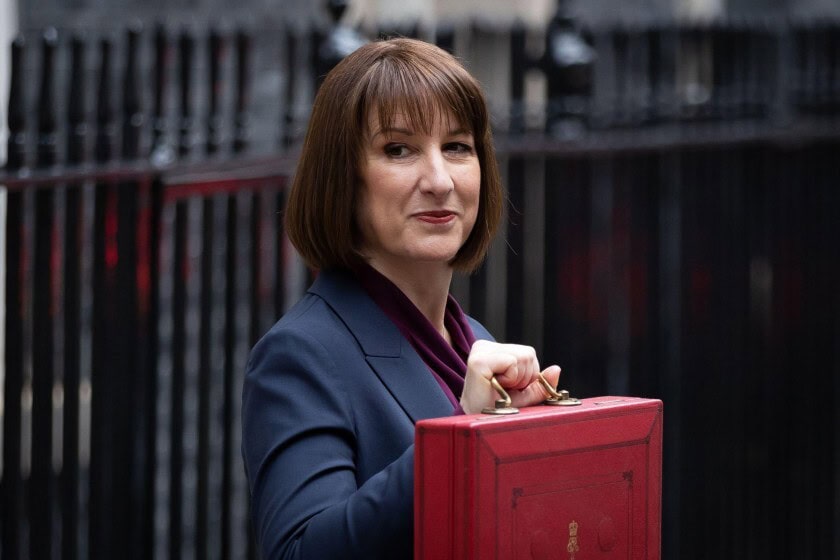
Chancellor Rachel Reeves is intent on filling a £25 billion gap in the public finances and raising £5bn for a buffer to mitigate against financial shocks. The Office for Budget Responsibility (OBR) has updated forecasts to take lower borrowing costs into account – good news for Rachel Reeves. But it has also revealed higher-than-expected borrowing – bad news for the Chancellor.
In Wednesday’s Budget Reeves is widely expected to extend “stealth taxes” on personal incomes, raise more money from expensive properties, and pensions through capping salary sacrifice schemes.
With consumer and business confidence deteriorating, unemployment rising, and the economy seemingly stagnating, here are some of the measures that observers have speculated Reeves might take to turn things around this winter.
Extend freeze on personal tax thresholds
Reeves is widely expected to extend the freeze on national insurance contributions (NICs) and income tax thresholds beyond 2028 – rather than indexing them to follow inflation. An extension to 2030 for both would raise £8.3bn a year, according to the Institute for Fiscal Studies (IFS).
More than 8.3 million people are now paying the higher and additional tax rates of income tax, an increase of more than 45% since the start of the freeze in 2021.
Such a change to the threshold rules is described as a “stealth tax” because it pulls working people – including the self-employed and landlords – and pensioners into paying higher rates.
Levy on LLPs
Expanding National Insurance or an equivalent charge to Limited Liability Partnerships (LLPs) is another speculated proposal. This would primarily impact accountants and lawyers.
The professional services sector has lobbied publicly against any higher taxes on them at a time when they’re facing major regulatory changes. “From anti-money laundering compliance to evolving tax adviser rules – this additional burden risks creating a perfect storm that stifles investment, hiring, and innovation,” the sector argues in an open joint letter to Reeves.
Reports suggest the move is politically difficult given the impact it would also have on doctors, at a time when NHS wait lists need to be reduced.
Danni Hewson, head of financial analysis at AJ Bell, said: “It could also have a knock-on effect to the amount of capital available to invest in UK start-ups and scale-ups – innovative businesses that are vital for economic growth – for a relatively small amount of revenue gained for the Treasury.”
‘Mansion’ and landlord taxes
An annual “mansion tax” on high-value properties and charging the owners’ capital gains tax (CGT) upon sale are two more possibilities raised in the pre-Budget rumours.
Any new levy may not be brought in until 2028, to allow home reassessments. Homeowners may also be allowed to defer paying the new tax until they move house or after death – allaying concerns that people could be forced out of small-but-expensive properties.
Major reform of council tax is another idea receiving coverage. This would see 2.4 million English properties in the highest tax bands revalued (F, G and H), and increased rates for the 310,000 most expensive properties (valued over £1.5 million).
The plan would raise around £600m a year, and cost high-value homeowners an extra £2,000 a year.
A separate proposal is charging NI on rental income. Mortgage adviser Boon Brokers cites research saying almost nine in 10 UK tenants believe such a tax would “destabilise the private rental market, force rent increases, and force small landlords out, fuelling corporate control of the rental market”.
Dipan Shah, private business tax leader at PwC UK, says the chancellor may also look at more targeted changes, “like restricting certain reliefs, adjusting rates depending on asset types, or making capital gains tax bands closer to those for income tax”.
‘Exit tax’
People quitting the UK could be required to pay a 20% CGT on their “unrealised gains” on business assets – including shares in private companies and other financial instruments – even if they are not sold at the time of departure.
Labour’s backbenchers are supportive of new wealth taxes like this. But such proposals reportedly have slid down the order of priorities following pushback from British start-ups warning. They warn such a change would deter entrepreneurship and drive IPOs, mergers and acquisitions and other liquidity events overseas.
Although this idea may be parked for now, it could be revisited if future fiscal events require further revenue-raising taxes. Recent changes like reduced business asset disposal relief and alterations to the non-domiciled regime are pressing founders to weigh up if they should stay in the UK.
Motorist taxes
Electric vehicle (EV) drivers could be hit with a new pay-per-mile levy, adding three pence a mile on top of other road taxes.
Reports suggest the average EV driver faces paying an extra £250 a year from 2028, when up to six million people are expected to be driving EVs.
The government could frame this as creating fairness, given petrol vehicle drivers currently pay £600 a year on average in fuel duty.
We have seen reports the chancellor could also abandon a 14-year-old freeze on fuel duty by allowing a 5p price cut to expire next March. Holly Grantham, PwC UK’s ESG tax leader, notes that “[i]n the long term, fuel duty will one day be a dead tax.” And she notes that recent PwC research found that “if no changes are made, there will be a potential £9bn loss through tax revenues by 2030 and a possible £27bn loss by 2040, the equivalent to halving the defence budget.”