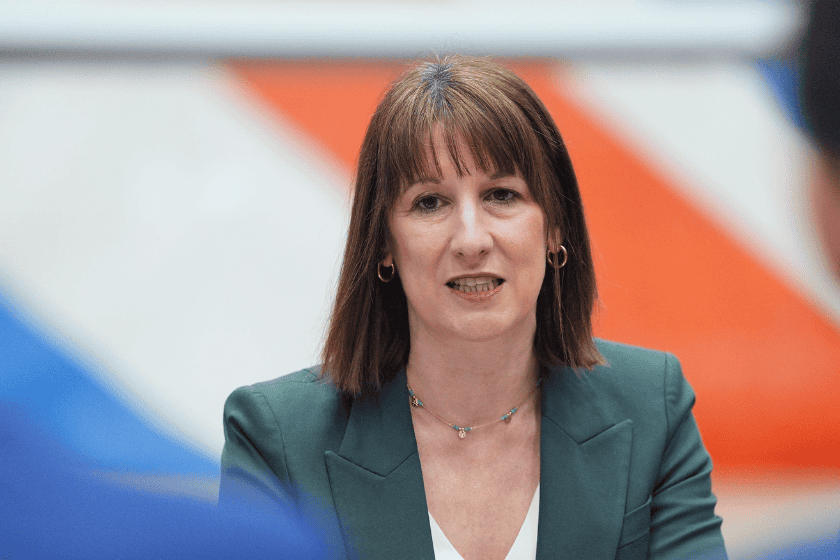
Chancellor of the Exchequer Rachel Reeves has used the 2025 UK Budget to announce £26bn in tax rises.
The chancellor announced tax increases on dividends, property and savings income, freezes to income tax and employer National Insurance thresholds until April 2031, and a scrapping of the two-child benefit limit.
She said her Budget meant no austerity or “reckless borrowing” but cutting the debt, waiting lists for health treatments, and the cost of living. These, she said, are “the Labour choices”.
The updated forecast from the Office for Budget Responsibility (OBR) has upgraded growth forecasts for 2025 to 1.5%, from 1%, but downgraded them for next year to 1.4%, from 1.9%.
The rises leave the government with £22bn worth of “fiscal headroom” – the amount by which the Budget balance can deteriorate and still stay within the fiscal targets that the government has defined for itself. Reeves’ principle target is that the Budget be in balance by 2029-30. The OBR now estimates a 59% chance of this happening without further policy change, up from 52% before the Budget.
Responding to Reeves’ speech, Conservative leader and leader of the opposition Kemi Badenoch said Labour was “hiking taxes to pay for welfare. This is a Budget for ‘Benefit Street’, paid for by working people.”
Narrowing the tax gap ever further
The Budget documents reveal tax administration, compliance and debt collection measures for those trying to swerve tax rules, including:
- legislating to further close in on promoters of tax avoidance, with a consultation on these measures in early 2026;
- a strengthened reward scheme for informants who provide valuable information on cases where more than £1.5m is recovered – allowing HMRC to tackle high-value avoidance or evasion and modelled on a US scheme;
- new, enhanced HMRC powers and sanctions against tax adviser-facilitated non-compliance from 1 April 2026; and
- £25m for additional Insolvency Service staff to disqualify more rogue directors who abuse the insolvency process to evade tax; and amending existing legislation to extend the circumstances in which directors who break the law can be disqualified.
To collect more unpaid taxes, the Treasury announced it would:
- invest £153m in HMRC’s debt management work;
- publish a new tax debt strategy which outlines plans to deliver year-on-year reductions to the overall tax debt balance as a percentage of tax receipts; and
- take steps to ensure income tax Self-Assessment taxpayers pay tax automatically via regular payments throughout the year.
From April 2029, businesses will also be required to issue all VAT invoices as e-invoices, with a roadmap on implementation set to be published next year.
In addition, the government will consult on requiring taxpayers of VAT, PAYE, and income tax self-assessment to make payments on a more regular, timely basis.
The government confirmed that, following consultation, it wouldn’t regulate tax advisers, but instead “work in partnership with the sector to raise standards in the tax advice market.”
Rumours of the introduction of an equivalent to employer’s NICs for LLPs were unfounded.
Training for under-25 apprenticeships will be free for small and medium-sized enterprises.
Tax ‘fairness’ reforms and raising revenue
The government announced reforms to tax relief, stating they “disproportionately benefit the wealthy and higher earners and have significantly risen in cost in recent years”, including capping NICs relief on salary sacrifice into pension schemes to the first £2,000 of pension contributions per person from 2029.
Commenting on this measure’s impact, Steve Hitchiner, chair of the tax group at the Society of Pensions Professionals (SPP), said it will “affect the take-home pay of millions of employees – especially basic rate taxpayers – and is a tax on working people, in spirit if not in name. It is also another sizable cost to employers and, perhaps most importantly, its restriction will reduce pension saving.”
The Budget also contains a 2% increase in taxes on property, dividend and savings income, a move targeted at narrowing the gap between tax paid on work and tax paid on income from assets.
From January there will be a new capital allowance of 40% during the first year for main rate expenditure, including most expenditure on assets for leasing and expenditure by unincorporated businesses.
There were also announcements aimed at economic growth and innovation, including a new Listing Relief from Stamp Duty Reserve Tax. A consultation has also launched inviting views from investors and the scale-up community on how the tax system can support entrepreneurs.
Commenting generally on the business measures in the Budget, PwC’s head of tax policy Colin Graham said businesses would take some confidence from the headroom the chancellor has created. However, big questions remain “on some of the larger tax policy levers that could be pulled to support economic growth for the medium- to long-term to realise the potential in the UK economy”.