At a glance
- Electronic spreadsheets like VisiCalc and Lotus 1-2-3 automated centuries-old accounting methods.
- Microsoft created Excel to compete with the then-dominant spreadsheet, Lotus 1-2-3.
- Launched as a Mac-only program in 1985, Excel took years to dominate the market.
Financial Accountant publishes this brief history on the 40th anniversary of Microsoft Excel’s launch on 30 September 1985.
For longer than most of us would have guessed, people have arranged numerical data in grids of rows and columns. The Babylonians used cuneiform characters to create data matrices out of clay as early as 1800 BCE. The Romans extended those matrices to track public funds and military supplies. 15th-century Italian bookkeepers transformed them again, into classical accounting records like the balance sheet. By the early 1900s, accountants used paper “spread sheets” – often fold-out pages literally spread across a desk – to track expenditures. Any modern Excel user would recognise those pages.
The modern spreadsheet appeared in 1979 after a Harvard Business School student, Dan Bricklin, watched his professor construct such a spread sheet with painful slowness. The professor stood at a blackboard ruled with vertical and horizontal lines, erasing and rewriting entries as parameters changed. It suddenly struck Bricklin that these calculations and recalculations could be performed electronically and automatically.
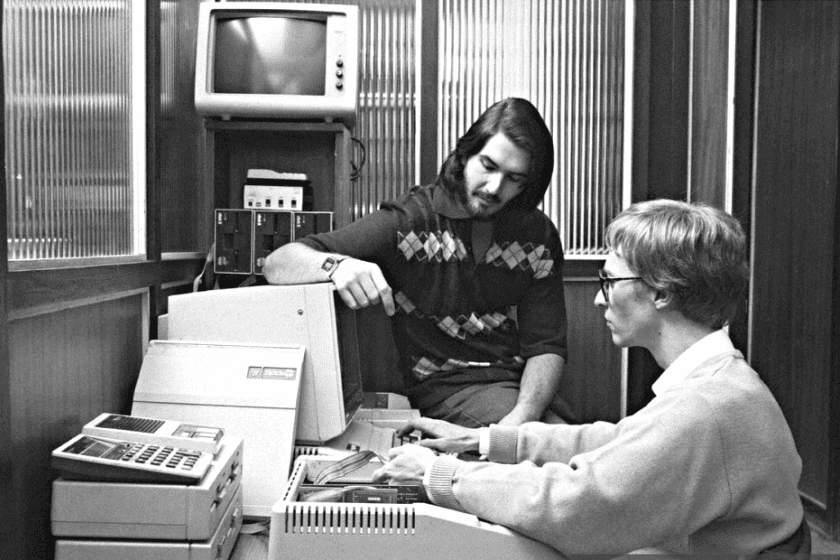
Within a few months, Bricklin and colleague Bob Frankston developed VisiCalc – short for “visible calculator” – and launched it as an application for the new Apple II personal computer.
Bricklin and Frankston had devised the PC’s first true killer app – and it was accountants, more than anyone else, that made it a success. VisiCalc turned 20 hours of manual calculation into 15 minutes of automated work, making sophisticated financial modelling possible for ordinary accountants.
In 1983 another emerging software firm, Lotus, seized the advantage with a product engineered to exploit the powerful new IBM personal computer. Within its first nine months, Lotus 1-2-3 sold more than 100,000 copies. With Visicalc distracted by legal fights, Lotus soon dominated the PC spreadsheet market.
Project Odyssey: the ‘Recalc or Die’ mission
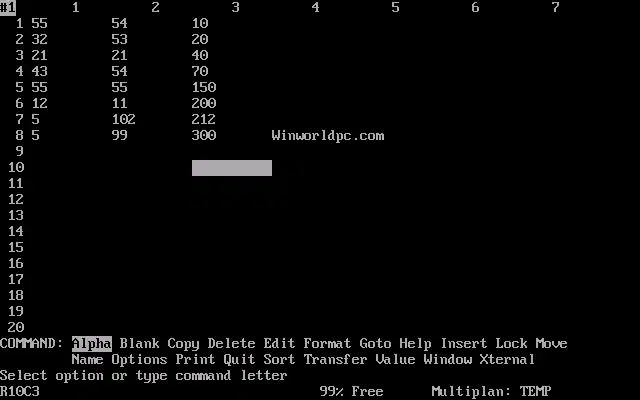
The rise of the IBM PC after its 1981 launch had similarly favoured another rising software star, Microsoft. IBM had selected it to supply its PC’s operating system, called MS-DOS. But Microsoft held a weak hand in the computer application market. Crucially, its Multiplan spreadsheet program was being clobbered by Lotus 1-2-3 for MS-DOS. Microsoft co-founder and CEO Bill Gates wanted a win.
In late 1983, Gates launched Project Odyssey, aimed at beating Lotus. Its aim was simple: create a spreadsheet that did “everything Lotus 1-2-3 did, but better and faster”
The team assembled for this digital odyssey was small but formidable. It included both Doug Klunder, a brilliant MIT graduate who served as lead developer, and Jabe Blumenthal, a wiry Yale-educated mathematician who was Microsoft’s first program manager. The head of Microsoft’s application group, Charles Simonyi, was also heavily involved – as was Gates.
Early in the development, Klunder, Blumenthal, Simonyi and Gates sequestered themselves in a room at Seattle’s Red Lion Inn for three days to plot Excel’s design. Klunder recounted the scene to journalist Thomas Weber in 2010. Using paper on an easel for notes, the four argued back and forth on the user interface and key program features. “There were two things that were the overriding goals,” Klunder said then. “One was simply loading it up with features. The other – looking back now, it sounds kind of crazy, but at the time it was major: speed, and speed of recalculation.” Speed, of course, had given Lotus its advantage over Visicalc.
“There were two things that were the overriding goals. One was simply loading it up with features. The other was … speed, and speed of recalculation.”
Doug Klunder
The team’s obsession with speed led them to focus on one potential killer feature, “intelligent recalc”: rather than recalculating entire worksheets when a single cell changed, the Microsoft program would selectively update only affected cells. The project gained the unofficial motto “Recalc or Die”; the team eventually commissioned t-shirts emblazoned with the motto. Gates regularly convened meetings to discuss optimisation strategies. Klunder has graciously suggested that Gates came up with the recalc mechanism, while also suggesting in one interview that Gates downplayed his own role.
Whoever came up with it, the intelligent recalc feature did indeed prove worth the effort: it gave the new spreadsheet a decisive performance advantage over Lotus 1-2-3.
The Macintosh gamble
The Project Odyssey name correctly suggested an arduous journey. In its most painful twist, Bill Gates decided in March 1984 that Excel would first run on Apple’s Macintosh platform.
The reasoning was strategically sound: Lotus had no Mac presence, giving Excel the opportunity to dominate one platform. But it was so traumatic for the team that Klunder – Excel’s technical linchpin – temporarily abandoned Microsoft to work as a migrant lettuce farmer in California. His departure created what one team member described as “not necessarily the most traditional or stable of environments” for a critical software project.
Fortunately for Gates, Klunder soon returned, and Excel began the march to its September 1985 launch.
And who gave the program that Excel name? It happened sometime in 1984, but no-one has ever taken credit – though many suggest it reflects Gates’ desire to outdo Lotus. We do have some of the rejected names: “Microsoft Plansheet”, “Master Plan”, “Number Body”, “Plan 3”, “Lever”, “Sigma”, “Champagne”, and – yes, really – “Mister Spreadsheet”.
An unlikely alliance: Gates and Jobs
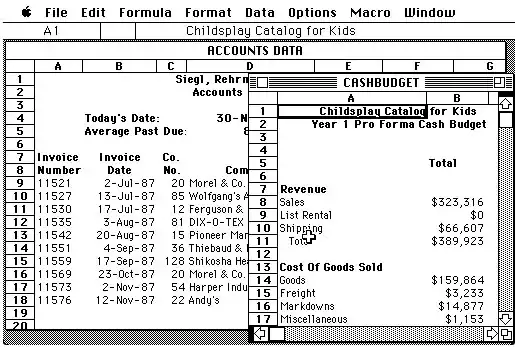
In May 1985, in a display of corporate theatre, Gates and Steve Jobs appeared together at Central Park’s Tavern on the Green restaurant to announce Excel’s arrival. Weirdly to modern imaginations, they announced that Microsoft’s new spreadsheet would launch as a Macintosh-only program. But by focusing on the Mac, with its graphical interface, Microsoft positioned Excel as the future of spreadsheet computing.
Jobs seems to have privately harboured reservations about the software’s readiness. He publicly declared Excel “the fastest, largest, and most full-function spreadsheet available in the world”. The joint appearance underscored the strategic importance both companies placed on the Mac platform’s success. Behind the scenes, Jobs warned Gates that significant polish would be required before the software could meet Apple’s standards.
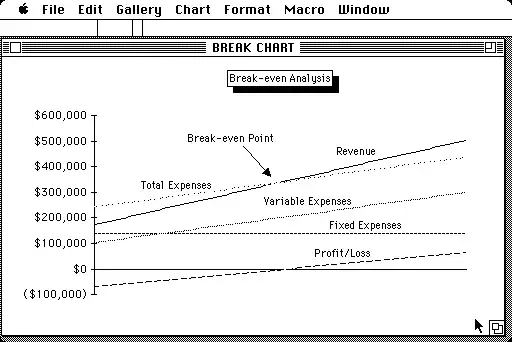
In one last dose of drama, that polishing continued right into the actual launch day. At almost literally the eleventh hour, the team discovered a critical bug. The resulting audit of the Excel code reportedly ran into the early hours of 30 September. The master disk was finally prepared and dispatched for duplication in the early-morning darkness, just in time for the first retail copies to hit New York software stores hours later.
The price tag on those first floppy disks of Excel 1.0 was $US395.
How Excel conquered the PC
At first, Excel was a mild success rather than a phenomenon. Two years after the launch, in 1987, Microsoft ported it to the PC as Excel 2.0. It remained a distant second in the market; by one estimate, it held a 6% share, to Lotus 1-2-3’s 85%. Even in 1990, a survey of American Institute of Certified Public Accountants members found just 2% of respondents using Excel as their spreadsheet.
But that was the beginning of the end for Lotus. It resisted moving to Windows, at a time when Windows was taking off. In 1990, Microsoft launched not just an improved Excel 3.0 but also Windows 3.0, with much-improved graphical user interface, multitasking and memory management. Within a few years Excel had the market leadership that Gates wanted. Despite everything, the program has never lost that marketplace dominance.
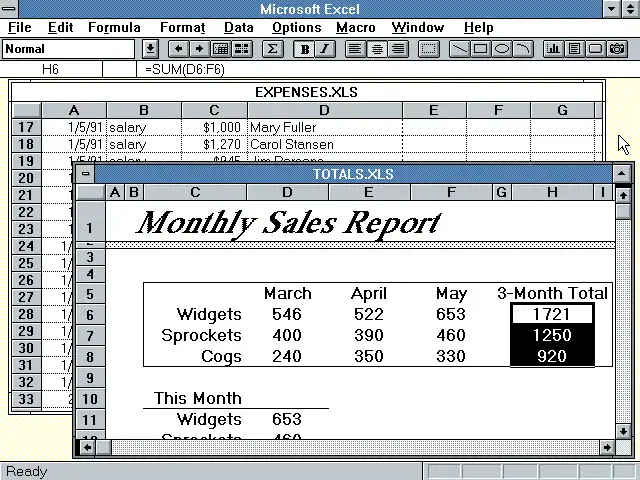
Excel’s 40th anniversary is worth observing. The spreadsheet could be argued to be the personal computer’s most important application, and Excel is by far the most successful spreadsheet. Along with predecessors such as Visicalc and Lotus 1-2-3, Excel created the 1980s corporate raiding epidemic; corporate buyout experts explicitly credited personal computers with transforming their business. Since its early years Excel has acted as the accountant’s Swiss Army knife, used for everything from to-do lists to cashflow statements to interfacing with huge databases.
Excel’s recent user base has been estimated at more than 1 billion people. So happy 40th, Excel!
Note: This pocket history of Excel draws from a wide range of documents. They include: Hannah Higgins, 2009, The Grid Book (Penguin Random House); Walter Isaacson, 2014, The Innovators: How a Group of Inventors, Hackers, Geniuses and Geeks Created the Digital Revolution (Simon & Schuster); Robert X. Cringely, 1992, Accidental Empires (Viking); Tim Harford, 2024, “What the birth of the spreadsheet can teach us about generative AI”, Financial Times; Grady Booch, 2008, Oral History of Charles Simonyi (Computer History Museum); William Deringer, 2020, “Michael Milken’s Spreadsheets: Computation and Charisma in Finance in the Go-Go ’80s”, IEEE Annals of the History of Computing; and Thomas E. Weber (2010), “Microsoft Excel: The Program’s Designer Reveals The Secrets Behind The Software That Changed the World 25 Years Ago”, Daily Beast.