At a glance
- Roman emperor Marcus Aurelius used stoic philosophy to manage difficult situations, with his timeless wisdom applicable to modern work challenges.
- Key stoic principles include focusing on what you can control, breaking problems into manageable parts and setting appropriate boundaries.
- Preparing for difficulties, managing expectations and maintaining emotional equilibrium can help professionals navigate today’s volatile world.
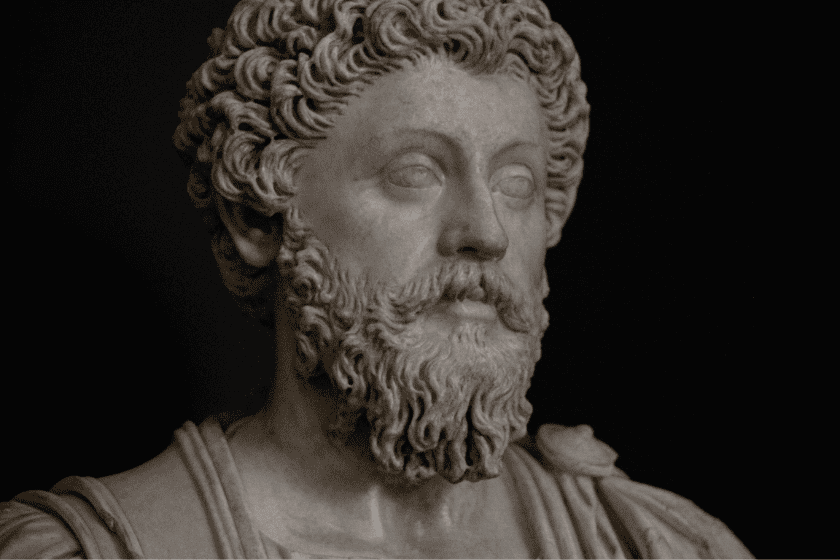
Aurelius started the day with the expectation people would be annoying, frustrating and meddlesome, which prepared for when he inevitably encountered difficult people. Taking a measured approach helped him not only keep the Roman empire afloat, but prevent work from taking over his life.
“You must always preserve in yourself the virtues of freedom, of sincerity, sobriety, and good nature,” he said in Meditations.
Stoicism is a philosophy that advocates a life of virtue and harmony with nature as the best means of achieving peace of mind. The trick is not to let niggles at work take up too much of your mental space.
A stoic is not concerned with what others think. Aurelius cared about taking charge of his thoughts, focusing on what he could control, taking on board criticism and leading a simple life. He believed that wishing for a different reality was pointless, when his efforts could be directed towards something more meaningful.
Matthew Sharpe, philosophy academic and author of Stoicism, Bullying, and Beyond: How to Keep Your Head When Others Around You Have Lost Theirs and Blame You, advises accountants and small businesses to start by establishing what you can control and what you can’t.

“If you can focus energy on what you can affect or change, you’ll be as efficient as you can be,” Sharpe says. “You’ll also be able to look yourself in the mirror if things don’t go well, and know you’ve done everything you could.”
Break down problems into parts and scenario plan
Sharpe suggests dividing overwhelming situations into smaller, more manageable parts to break the cycle of overwhelm. “Marcus Aurelius notes that a lot of big problems, which seem overwhelming, are lots of little problems in a sequence,” he says. “If you take them one by one, you’ll find you have the resources to get through each step. In time, you’ll have overcome the entire challenge.”
There are some challenges that are beyond our sphere of control. For those with anxiety about climate change, democracy and other mega issues well beyond our influence, scenario planning could help.
“If there are things beyond our control, and of course in almost all situations in life there are, there are strategies for reducing anxiety that stoicism provides which I’ve found helpful,” he says. “You can plan alternative scenarios: from the best, where everything goes well, to the worst, where things outside your control don’t go as you wish.”
When you wake up with vivid, catastrophic thoughts of work at 4am, you do not have the resources at that moment to manage whatever problem is causing sleeplessness. You cannot call, email or set up a meeting to resolve an issue. But you will soon and things will seem much better under the cold, hard, fluorescent lighting of your office.
“Try to premeditate that situation, and ask yourself: what resources and choices are still going to be available? What moves can I make to get the best out of the bad situation?”
Sharpe believes that knowing you are not powerless reduces anxiety. “Anxiety is all about the sense that bad things are going to happen, and then all will be lost,” he says. “Maybe some things will be, but not usually our capacities to make choices, and to try to show courage and ingenuity in the face of the challenge.”
Focus on your own behaviour
Aurelius began each day with the expectation he would meet difficulty. Preparing his mind in this way helped him control his responses better.
“Begin the morning by saying to yourself, I shall meet with the busybody, the ungrateful, arrogant, deceitful, envious, unsocial,” Aurelius said. “I can neither be injured by any of them, for no-one can fix on me what is ugly nor can I be angry with my kinsman, nor hate him.”
“Marcus Aurelius notes that a lot of big problems, which seem overwhelming, are lots of little problems in a sequence.”
Matthew Sharpe, philosophy academic and author
He advised that “if anything external vexes you, take notice that it is not the thing which disturbs you, but your notion about it”.
Sharpe reinforces the notion that we can’t control other people. Some people can be difficult, whether they be clients, students or staff who don’t always mean well. “Sometimes, they think unfair things about us, or about colleagues,” he says. “Sometimes, they stir up trouble, take more than they offer and create friction.”
The first step is to recognise that we cannot “make their choices for them” and that it’s best to focus on our own responses. But we can attempt to understand their motivations to better understand their difficult behaviour.
“To understand is not to forgive, sometimes, but it does allow us to take our own egos out of the picture, and to start to try to find ways to work as well as we can with the other person,” Sharpe says. “If they are insulting, Stoicism asks us to try to accept that the wrong here is in their bad conduct, not in ours – unless we respond by doing something worse.”
Sharpe advises communicating “you are trying to understand where they are coming from, but also that there are boundaries”.
Managing difficult people is a challenge in the working world. Reflecting that stress may cause ourselves to act poorly helps us better understand our tricky counterparts.
“Showing the difficult person that you aren’t against them, that you are able to be above any insults that have been thrown around, and that you are trying to be constructive—all of which requires practice and patience—can be immensely powerful,” Sharpe says.
Set boundaries and say no
When you feel pressured into saying yes to another work request, Aurelius would advise that you focus on what is necessary and discard things that are not essential.

“For the greater part of what we say and do, being unnecessary, if this were but once retrenched, we should have both more leisure and less disturbance,” he says.
He uses the Greek word euthymia, which is usually translated as tranquillity but also means staying on a path without distraction. That means stepping back and not being a slave to meetings, calendars, invitations and requests that ultimately don’t matter.
Sharpe says a principal cause of stress is doing too much and a lack of boundaries between work and home life, with technology increasingly blurring the lines.
“If different parts of life start flowing into each other, it’s easy to feel like you’re not doing anything well,” he says. “You want to be a good parent, but there are these emails. You want to be a good manager, but your kids need and deserve your attention.
“Boundaries and schedules, and setting expectations with others who rely on you are all ways of reducing stress and burn out, and creating time to reboot.”
Use dichotomy of control
Multiple wars, shifting democracies and international tension are enough to cause existential angst.
“We are social creatures,” Sharpe says. “It’s natural to want to pay attention and do what we can, for our children and ourselves, and our communities, to make the world a better place. But, often, we can’t all of a sudden change everything that might ideally need to be changed.”
Fellow stoic Seneca noted that if a person was angry at everything stupid or evil humans ever did, they would go mad and their rage would prevent them from making a meaningful contribution to the world.
“If anything external vexes you, take notice that it is not the thing which disturbs you, but your notion about it.”
Marcus Aurelius
“We need to apply the dichotomy of control: accept what we can’t change, work out what we can do with the resources of time, energy, connections, abilities, etc. that we have, and try to do as much as possible,” Sharpe says.
“Recognising that when our actions involve other people, we can only be confident that we can do our best, not that everything we might wish if we were a God will be accepted and come to pass.”
He cautions that “sadness and despair lead to inaction” and that we are more effective if we can keep our spirits up rather than languish in misery. Use sources of joy to energise our spirits and inspire others.
“Value and appreciate those parts of your life, family, friendships, relationships, pets, nature, whatever, that remain undamaged and undiminished,” Sharpe says.
Anticipate lean times
Unmet expectations in matters that are outside our control leave us vulnerable, fragile and disappointed. The Stoic practice of negative visualisation – contemplating the worst-case scenario in advance – is a better alternative than daydreaming about unattainable fantasies. This technique helps us navigate tricky scenarios should they arise, and prepares us for the worst.
The Stoics would tap into their wellspring of resilience and resourcefulness to confront whatever reality occurs, instead of conjuring fanciful ideas of how things should unfold.
“The Stoics would suggest that we can forearm ourselves, by being forewarned of lean times or troubled waters—even if we can’t change them,” Sharpe says.
“The best stoic way to address the difficulties of doing business in a time when economic downturns seem possible is to try to model, to the extent you can, what kinds of negative possibilities are on the horizon.
“Then, with your team or by yourself, it becomes a question of mapping out how the difficulties might look and planning for responses.”
Annie Lawson is editor of Financial Accountant Digital and author of Stoic at Work and Stoic in Love, published by Murdoch Books in the UK.
More information on IFA’s CPD essentials bundle here.